
Sprinklers, gas or both
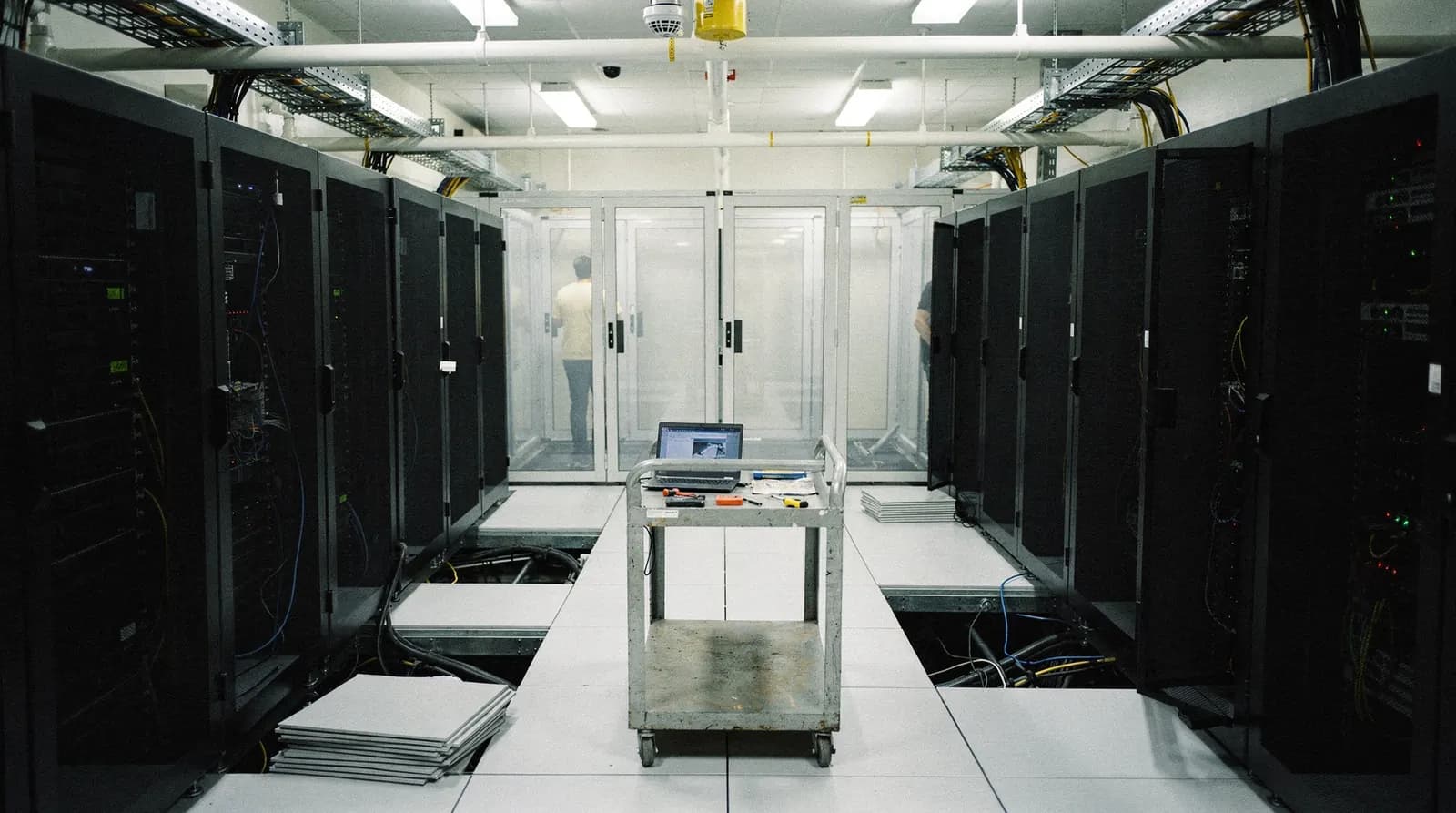
Most data rooms end up with one of two answers, a preaction sprinkler system or a clean agent gas system, and plenty of buildings carry both. They're both legitimate. They fail in different ways, so the choice is really a decision about which failure you can live with.
The building around the room matters too. A clean agent system usually goes in on top of the building's sprinklers, not instead of them, which is worth knowing before anyone offers to delete the sprinklers from a quote.
Which standard is actually in play
NFPA 75, the standard for protecting information technology equipment, doesn't appear in the referenced-documents table of the National Fire Code 2023 Alberta Edition. So it isn't law here by name. It applies where the AHJ, the building owner or an insurer invokes it, and plenty of owners do. NFPA 76 does the same job for telecommunications facilities. NFPA lists a 2024 edition of both, so confirm which one your lender or insurer means.
What NFPA 75 asks for, going by a published engineering summary of an earlier edition (check it against the current text):
- IT rooms in a sprinklered building get sprinklers too;
- under a raised floor, an automatic sprinkler or a gaseous system where data protection is critical or combustibles are present;
- one-hour separation from the rest of the building;
- smoke detection at the ceiling and under the raised floor, with clean agent systems released by approved detection.
The rules Alberta does name are these: alarms to CAN/ULC-S524:2019, sprinklers to NFPA 13-2019, and clean agent systems to NFPA 2001-2018 (listed in NFC(AE) 2.1.3.5).
What protects which space
| Space | What goes wrong | What usually protects it |
|---|---|---|
| Server hall | Cable or equipment fire, slow detection, accidental discharge | Aspirating smoke detection, then preaction sprinklers or clean agent |
| Under a raised floor | A hidden cable fire nobody sees | Detection below the floor, plus a sprinkler or gaseous system where NFPA 75 asks |
| Network and telecom rooms | A small fire in a small room that carries a lot of traffic | Often clean agent, where the AHJ, owner or insurer wants it. NFPA 76 covers these spaces |
| UPS and battery room | Battery fire, which depends on the chemistry | See the lithium-ion section below |
| Generator and fuel | Flammable liquid | NFC(AE) Part 4 and NFPA 30-2018 for the fuel, CSA C282-15 for generator testing |
| Offices and support areas | Ordinary combustibles | The building's wet sprinklers, alarm and extinguishers |
Preaction or clean agent
A preaction system keeps its pipe dry until detection opens the valve. A knocked head or a nicked pipe doesn't flood the room on its own, because there's no water in the pipe to come out. Detection has to sound first, and then a head still has to fuse. That's the appeal for a server hall: water only arrives where there's real heat.
Within preaction, the choice is single or double interlock. Single interlock opens the valve when detection operates. Double interlock needs both: detection has to operate and a head has to fuse, dropping the pipe's air pressure, before the valve opens. That adds delay. Some AHJs won't accept double interlock for server rooms (San Francisco Fire's Administrative Bulletin 4.21 is one published example), so ask yours before you price it.
Clean agent works differently. It floods the whole room with a gas that stops the fire without water or residue, and Alberta references NFPA 2001-2018 for it. The trade-off is that it's a one-shot. Once the cylinders empty, protection is gone until they're refilled, and it does nothing useful if the room can't hold the gas.
Our rule of thumb is blunt. If an hour of downtime costs more than the fire system, choose gas, and pay for detection that gives staff time to react before it releases. If it's a small closet nobody would miss for a day, preaction may be plenty.
One supply point for the design phase. 3M exited PFAS manufacturing, including its Novec 1230 brand, by the end of 2025. The same agent (FK-5-1-12) remains available from other makers, and Canada is phasing down HFC consumption. Ask how the cylinders would be refilled in year ten, and who'd do it. Special hazard suppression covers the agents Sterling lists.
A gas system is only as good as the room around it
Clean agent has to hold its concentration long enough for the fire to go out and for people to respond. NFPA 2001 generally asks for the concentration to hold for 10 minutes, or long enough for trained personnel to respond, and the door fan test in the standard's Annex C is how you find out whether the room can manage it. A fan in the doorway pressurizes and depressurizes the room, the test measures the leakage each way, and the two readings get averaged.
The leaks are rarely dramatic. Unsealed cable penetrations, gaps above the drop ceiling, a door with no sweep, an HVAC damper that doesn't quite close. Any of them can drop the hold time below the minimum.
And the room keeps changing. Every cable tray that gets a new hole after commissioning is a new leak. So test at the start, and retest whenever a trade has been through the wall. Somebody should be checking what a wall is made of, and what it's protecting, before anyone cores through it.
Detecting smoke before anything discharges
Aspirating smoke detection (VESDA is the best-known brand, and Sterling lists air sampling among its alarm options) pulls air through a network of small pipes to a central detector. It can raise a warning at a faint haze, long before a spot detector on the ceiling would notice. Staff get a first-stage alert and time to walk to the rack. Gas or water is the last stage, not the first.
Cross-zoned spot detectors, where two must trip before release, are the other common arrangement. Either way the panel sits on the building's alarm system, and Alberta's code references CAN/ULC-S561-13 for the fire signal receiving centre that monitors it.
After a discharge
The exact order comes from the system manual and the fire department, but it usually runs like this.
- Get everyone out and account for them.
- Confirm the fire department has been called. The panel signals monitoring, but don't assume.
- Keep the door shut through the hold time unless the fire department says otherwise.
- Ventilate the room the way the design says to before anyone goes back in. A halocarbon agent can leave acidic decomposition products after a real fire, so don't rush it.
- Find out why it discharged, from the panel's event log as well as the room.
- Have a qualified technician refill or replace the cylinders, reset the panel and retest before the system goes back in service.
- Write it up and keep the report. Inspection records stay on site for at least five years.
If it happens at night, our 24/7 emergency line is 780.760.0806. Alarm troubles and accidental discharges are what it exists for.
Lithium-ion battery rooms
Lithium-ion UPS batteries change the problem. They can go into thermal runaway, and NFPA 13 doesn't cover the design of lithium-ion battery storage, so designers borrow from other standards and test data. The National Fire Sprinkler Association's 2024 summary says NFPA 855 (stationary energy storage systems) sets a maximum of 600 kWh per fire area and a prescribed sprinkler density in its prescriptive path. We couldn't confirm that Alberta names NFPA 855 in its codes, so treat it as a conversation with the AHJ and the insurer, and get their answer before design starts.
Testing what you've built
Sprinklers are tested to NFPA 25-2017 (a preaction system adds trip tests), fire alarms to CAN/ULC-S536:2019 every year, and suppression systems by someone with post-secondary or manufacturer certification for that system. A door fan retest and a check of the cylinder weights belong on the inspection calendar too.
What Sterling can do for a technology room
We can design the preaction layout and the alarm system, including air sampling detection and the ULC monitoring integration, install clean agent systems, sprinklers and alarms, and take on the annual inspection. When a code question comes up, such as an AHJ that won't accept your interlock choice, that's fire code consulting. Start with the fire alarm and sprinkler system pages, or send the room details through the contact page.
Frequently asked questions
Do data centres in Alberta have to follow NFPA 75?
Not by name in the code. NFPA 75 isn't in the NFC(AE) 2023 referenced-documents table. It applies when the AHJ, the owner, an insurer or a contract invokes it. Ask early which edition they mean, because NFPA lists a 2024 edition.
Can a server room have regular wet sprinklers?
It can, and NFPA 75 asks for sprinklers in IT rooms inside a sprinklered building. Owners pick preaction to cut the chance of an accidental discharge, since the pipe stays dry until detection operates. What suits your room depends on downtime cost, the AHJ and the insurer.
Is double interlock preaction allowed for server rooms?
That's the AHJ's call. Some jurisdictions have refused it for server rooms because of the delay before water flows. Ask before you price it.
Sources
- National Fire Code 2023 Alberta Edition, National Research Council Canada
- Demystifying IT room protection requirements, Consulting-Specifying Engineer
- Current Protection Standards for Lithium-Ion Batteries, National Fire Sprinkler Association
- Preaction Design Guide, Reliable Automatic Sprinkler Co.
- Administrative Bulletin 4.21, San Francisco Fire Department