Two fire problems under one industry
Fire protection for Edmonton hotels and entertainment venues covers two problems that have little in common: guests asleep in a building they've never seen, and crowds who are awake, in low light and packed close.
The National Building Code's appendix notes sort them by group. Hotels and motels are Group C, alongside apartments. Theatres are A-1, restaurants and exhibition halls A-2, arenas A-3. The group drives which rules the building has to meet, so a restaurant that turns into a nightclub, or a banquet room that gains a stage, changes the occupant load and the code triggers with it. An existing system has to be upgraded if a change of use creates a hazard beyond what it was designed for (NFC(AE) 2023, Division B, 2.1.3.1). Fire code consulting is cheaper before the fit-out than after it.
Guest rooms, drills and the 18 m line
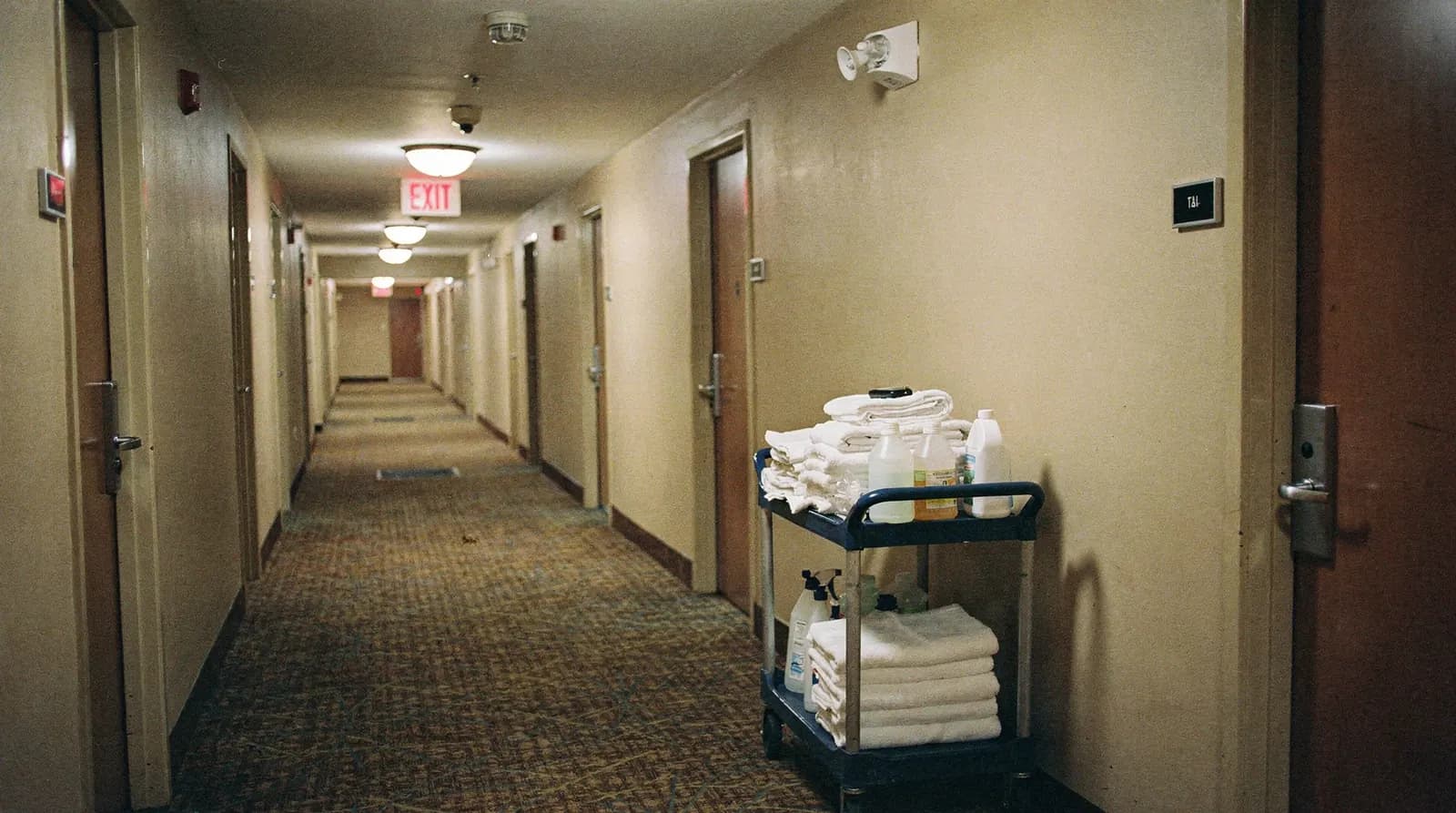
Each hotel sleeping room that isn't a dwelling unit needs its own smoke alarm (NFC(AE) 2023, 2.1.3.3), and hotels and motels have to keep test records for smoke and CO alarms (6.7.1.1). The fire safety rules, with exits and paths of travel, must be posted in every hotel bedroom (2.8.2.14). Small items. Also the easiest to let lapse when housekeeping turns over.
Then there's height. A building with a Group C floor above 18 m falls under the code's high-building rules (NBC 3.2.6.1). Those bring:
- voice communication integrated with the fire alarm (NFC(AE) 2023, 2.1.3.2)
- emergency lighting that runs for 2 hours, not the usual 30 minutes (NBC(AE) 2023, 3.2.7.4)
- fire drills at least every 2 months (NFC(AE) 2023, 2.8.3.2)
- a fire safety plan kept at the central alarm and control facility (2.8.2.12)
Voice evacuation lets the building tell guests which stairs to use, which in a tall hotel at 3 a.m. is most of the plan. Below 18 m those rules don't apply on height alone, and the building's own code analysis says what it needs. Whether a given hotel needs sprinklers at all turns on its size and height under Part 3, which the sprinkler systems page walks through.
Nightclubs, theatres and event rooms
Crowds in the dark are a paperwork problem before they're a hardware problem. NFC(AE) 2023, 2.8.1.1, requires fire emergency procedures, in effect a fire safety plan, for any building with an assembly occupancy over 30 people and for any building with a licensed beverage establishment or licensed restaurant. In a Group A-1 theatre intended for more than 60 people, at least one trained supervisory staff member has to be on duty whenever the building is open to the public (2.8.1.2). Drills for supervisory staff come at least yearly, and so does the plan's review (2.8.3.2 and 2.8.2.1). Our guide to fire safety plans in Edmonton covers who needs one and what goes in it.
The other number is the occupant load. The fire code caps any room at the lesser of one person per 0.4 m2 of net floor space and the load its means of egress were designed for (NFC(AE) 2023, 2.7.1.3), and in assembly occupancies over 60 people the figure has to be posted near the principal entrances to the room or floor area (2.7.1.4). Get your AHJ's number in writing before the layout is fixed.
The alarm system carries its own duties. A single-stage alarm in an assembly occupancy over 300 has to notify the fire department through monitoring to CAN/ULC-S561 (NBC(AE) 2023, 3.2.4.7). Emergency lighting has to cover the floor areas where the public gathers in Group A-1 occupancies, and in A-2 and A-3 occupancies with an occupant load of 60 or more, at 10 lx average and no less than 1 lx at any point (3.2.7.3). Rooms for more than 60 people in theatres, dance halls and licensed beverage establishments, where the lights get turned down, also need an exit sign over or beside every egress doorway, not just the exits (3.4.5.1(7)). Emergency lighting testing in Alberta explains how the monthly and yearly tests work.
One practical clash. Haze and fog effects set off ordinary smoke detectors. Switching detectors off for a show means running with part of the alarm out of service, and a system out for more than 2 hours brings notification and surveillance duties (Division C, 2.2.7.2). Raise the effects with the alarm designer at the start, so detector type and location can be chosen around them. See 24/7 emergency repair for what an impairment involves, and fire watch requirements in Alberta for where the code names a fire watch.
Kitchens and their exhaust
A commercial kitchen runs open flame and hot oil all day, with grease building up in the exhaust. NFC(AE) 2023, 2.6.1.9, brings commercial cooking under NFPA 96-2017 for that exhaust system. The hood protection is a wet chemical system tested to UL 300, with a Class K extinguisher near the cooking line, and the building code wants emergency lighting in commercial kitchen food preparation areas (NBC 2020, 3.2.7.3).
The trap is the appliance lineup. Nozzles are placed for the equipment that stood under the hood on install day, so a new fryer or a moved griddle can leave something uncovered. Get the installer's sign-off before the equipment moves. We work with Amerex kitchen suppression systems as part of our special hazard work; the special hazard suppression page has the detail.
Testing a hotel while guests sleep in it
The annual fire alarm test reaches every device in the building (CAN/ULC-S536:2019), and in a hotel that means the ones inside guest rooms. So the inspection is a logistics job as much as a technical one.
| Area | What gets tested | Who and what to line up |
|---|---|---|
| Guest rooms | Smoke alarms or detectors, horns, sprinklers in view | A run of vacant rooms, agreed with housekeeping and the front desk |
| Corridors and stairs | Emergency lights, exit signs, manual stations, door hold-opens | Quiet hours for anything loud |
| Kitchen | Hood suppression, Class K extinguisher | Between service periods |
| Ballroom, bar or theatre | Horns, strobes, voice messages, emergency lighting | A day without an event |
| Back of house | Panel, monitoring link, pump, valves, backflow assembly | Engineering staff, and the monitoring company on test |
Spread it over several days instead of one loud one. Hold blocks of rooms out of inventory, warn guests when the horns will sound, and call the monitoring company before any test so a signal doesn't send a fire truck. Keep the dated results at the building. No inspection record can be destroyed within five years, and records stay on site (Division C, 2.2.1.2). Frequencies for each system are on the fire system inspections page.
What we can design, install and service for hotels and venues
Inside the services Sterling lists:
- design, with hydraulic calculations and permit drawings, for sprinkler and fire alarm systems
- installation of sprinklers, addressable fire alarms with voice evacuation, and emergency lighting and exit signs
- work with Amerex kitchen suppression systems, and Class K extinguishers
- inspection, testing and maintenance to NFPA 25-2017, CAN/ULC-S536:2019 and NFPA 10-2013, with deficiency reports
- code consulting on occupancy classification and change of use
- 24/7 emergency repair for alarm troubles and freeze-ups
The fire safety plan and the staff drills stay with the operator. To start, send the address, the use and the occupant load through the contact page, or call 780.760.0806.
Frequently asked questions
Does a hotel in Alberta need a voice evacuation system?
When the building falls under the high-building rules, yes. A Group C building with a floor level above 18 m does, and NFC(AE) 2023, 2.1.3.2, requires voice communication integrated with the fire alarm wherever those rules apply. Below that height, the requirement comes from the building's own code analysis. Your design professional and AHJ settle it, and the fire alarm systems page covers how voice evacuation works.
Does a bar or restaurant need a fire safety plan?
Yes. NFC(AE) 2023, 2.8.1.1, requires fire emergency procedures for any building containing a licensed beverage establishment or licensed restaurant, and for assembly occupancies over 30 people. Supervisory staff are trained in the plan before they carry any fire safety duty, it's reviewed every 12 months, and drills for those staff come at least yearly. Keep the plan in the building for the fire department and the AHJ.
How often are hotel fire alarms tested?
Every device and panel function gets a full test once a year to CAN/ULC-S536:2019, on top of routine daily and monthly checks. Hotels and motels also have to keep test records for their smoke and CO alarms (NFC(AE) 2023, 6.7.1.1). No inspection record may be destroyed within five years, and records stay on site.
Can a restaurant replace a fryer without touching the hood suppression?
Not safely. The nozzles are aimed at the appliances that were under the hood when the system was installed, and a new or moved unit can sit outside their coverage. Have the installer confirm the layout, and adjust the system if it needs it, before the appliance goes in. Exhaust hoods and ducts are also covered by NFPA 96-2017 cleaning and inspection rules.
Sources
- National Fire Code 2023 Alberta Edition, National Research Council Canada
- National Building Code 2023 Alberta Edition, Part 3 code update information, BILD Alberta
- Building Code: Extracts from the National Building Code of Canada 2020, Aimlite, reproduced with NRC permission
- Fire Safety Plan Information Package 2024, City of Lethbridge (reproduces NFC(AE) 2023 Section 2.8)
- Amerex KP kitchen suppression system, Amerex
- Fire codes and standards, Government of Alberta