One plant, several hazard classes
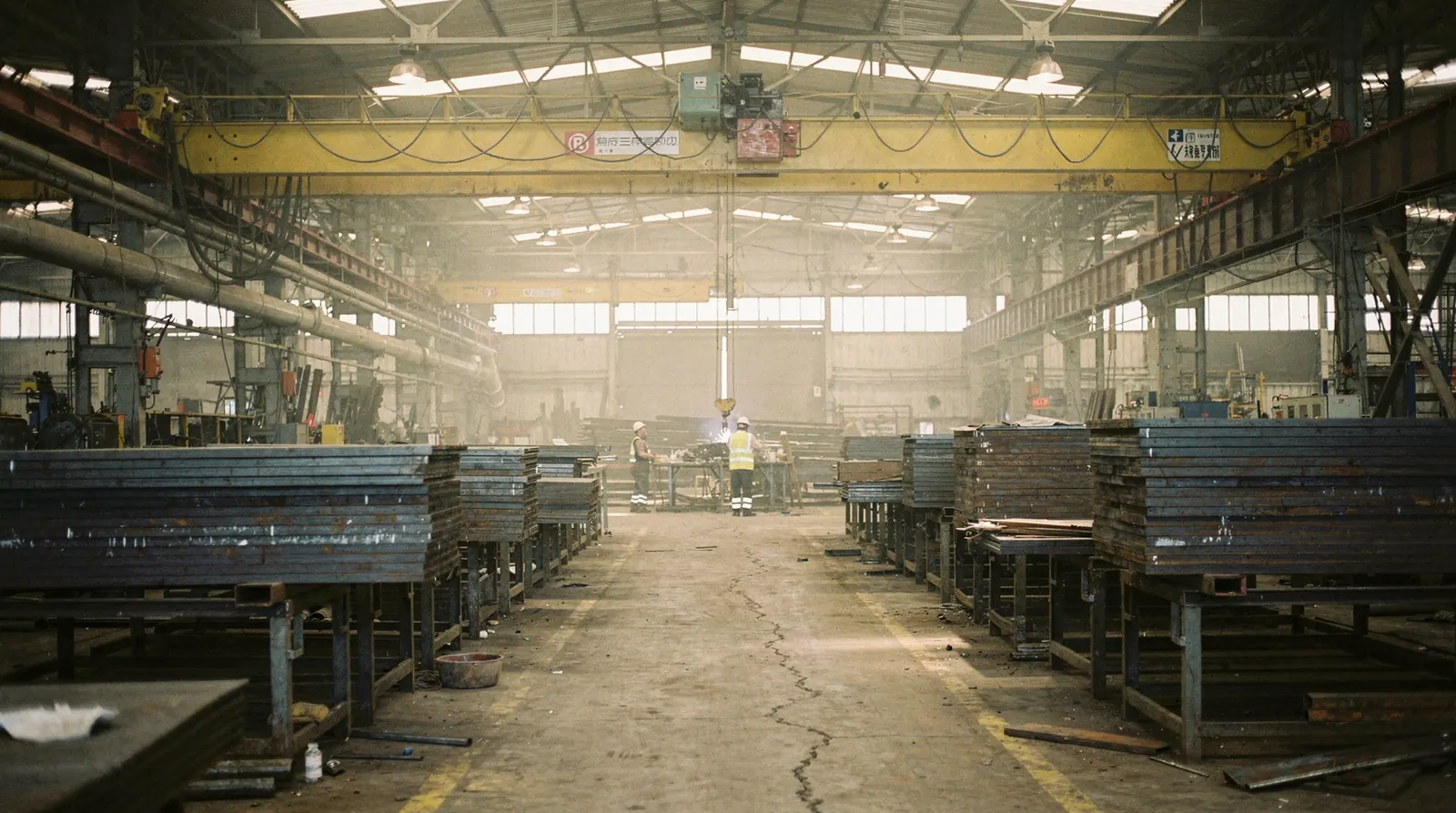
A manufacturing plant is rarely one hazard. Assembly benches, a machine shop, a paint line and a chemical store can all sit under one roof, and each asks something different of the sprinklers. NFPA 13-2019 sorts occupancies into light, ordinary and extra hazard groups, and its annex examples of extra hazard include areas that use combustible hydraulic fluid. Check the annex for the edition your designer is bound to, and don't assume a plant's most hazardous room is the same as its average one.
Design to the worst room and you overspend on the rest. Design to the average and the worst room is underprotected. The usual answer is to zone the sprinklers by room and write the hazard class on the drawings, so the next person to move a wall knows what's behind it.
The building code's own examples put factories in Group F-2 and high-hazard processes such as spray painting and flammable liquid plants in Group F-1. A plant with a paint line may be a mix of both, and the occupancy call is fire code consulting work.
Flammable liquids, dip tanks and paint booths
Alberta's fire code handles these in layers. NFC(AE) 2023, Part 4, covers storage and handling of flammable and combustible liquids and references NFPA 30-2018. NFPA 33-2018 covers spray application and NFPA 34-2018 covers dipping and coating processes, both referenced in the code's table.
Two practical rules sit outside the sprinkler contract. First, only individuals approved by the Provincial Fire Administrator (through CPCA, TSSA or PTMAA certification) may install, remove, repair or maintain storage tank systems, and most tank system plans need a registered engineering professional's authentication (Division C, 2.2.3.1). We don't do that work. Second, a spill over 200 L, or enough to sheen surface water, means notifying the fire department immediately and the AHJ in writing within 24 hours (Division C, 2.2.7.1). Put that on the wall of the shipping dock, not in a binder.
Quench oil and heat treating
A quench tank fire is fast. Insurer guidance such as FM Global Data Sheet 7-41 describes the common cause: the oil is heated past its flash point because the tank's cooling fails or the load is too heavy. It can grow fast enough that a portable extinguisher isn't a plan. Ceiling sprinklers are the baseline protection, but water on hot oil turns to steam, and hose streams can make a tank froth over. Fire severity tracks the surface area of the liquid, so keeping the oil contained in the tank helps.
NFPA 86-2019, the ovens and furnaces standard, covers furnaces with integral quench tanks. Alberta's fire code calls it up directly for baking and drying processes that give off flammable vapours (NFC(AE) 2023, 5.4.1), and your insurer or AHJ may apply it to other furnaces. Whether a tank also needs its own fixed system and a cover comes from the governing standard and your insurer's data sheet, and we wouldn't guess. See special hazard suppression for the agents we can install.
Dust in every trade that makes it
Combustible dust isn't only a food plant problem. Woodworking, plastics, chemical and some metalworking plants all make it. NFC(AE) 2023, Section 5.3, applies wherever dust builds up enough to be a fire or explosion hazard, and the code lists the individual NFPA dust standards, including NFPA 654-2017, 655-2017 and 664-2017, with NFPA 68-2013 for venting and NFPA 69-2014 for explosion prevention. The rules on vacuuming, blow-down, collectors and grounding are laid out on the food processing page.
Some metal fines react with water, so the agent has to be chosen with the process safety engineer and not assumed. Sprinklers deal with the fire. They don't prevent a dust explosion.
Hot work and plant shutdowns
Hot work is a permit, not a habit. NFC(AE) 2023 (5.2.3.6 and 5.2.3.7) expects at least one portable extinguisher in the hot work area and a fire safety plan where one is required. That's the minimum. A maintenance shutdown brings in contractors with torches and cutters and often takes sprinkler zones out of service at the same time, so hot work and impairments collide. Fire watch requirements in Alberta covers the hot work fire watch the code spells out.
Line them up before the shutdown starts. Any system out of service is an impairment needing alternative measures (Division B, 6.1.1.4), and a sprinkler impairment sits under NFPA 25 Chapter 15. We couldn't find a published City of Edmonton rule on fire watch patrol intervals, so settle that with the fire department before planned work, and read our inspection guide, impairment checklist and fire watch requirements in Alberta. If a valve gets closed mid-job and something goes wrong, the 24/7 emergency repair line is 780.760.0806.
When water is the wrong agent
The fire code lists the standards for fixed systems that use something other than water (NFC(AE) 2023, 2.1.3.5). For a plant, the choice usually follows the hazard.
| Hazard | Agent | Alberta-referenced standard | The catch |
|---|---|---|---|
| Control panels, PLC and electrical rooms | Clean agent | NFPA 2001-2018 | The room has to hold the agent, so leaks around doors and ducts matter |
| Enclosed machinery, some tanks and spaces | CO2 | NFPA 12-2015 | It's lethal to people in the space, so pre-discharge alarms and lockouts are part of the design |
| Flammable liquid pools and spill areas | Foam | NFPA 11-2016 | The concentrate has to suit the fuel |
| Process equipment with exposed flammable liquid | Dry chemical | NFPA 17-2017 | Cleanup after discharge |
| Cooling exposures around a hazard | Water spray | NFPA 15-2017 | Needs a large, dependable water supply |
We list clean agent, CO2 and high-expansion foam among our special hazard work, along with deluge sprinklers. Dry chemical, low-expansion foam and water spray aren't on our service list, so if your hazard calls for one we'd confirm scope first and work alongside whoever designs it.
What we can design, install and service in a plant
- sprinkler design and installation zoned by hazard, including deluge, dry and preaction systems
- clean agent, CO2 and high-expansion foam systems for the rooms and equipment that need them
- fire alarm and emergency lighting, with monitoring integration
- fire pumps and water storage, when the supply can't meet demand
- inspection and maintenance to NFPA 25-2017, and portable extinguishers through Amerex
- code consulting on occupancy classification, and 24/7 emergency repair
We don't design dust collection, tank systems or process controls. For a plant that also handles bulk product on site, mining and oil and gas covers the flammable liquid and remote-site side.
Frequently asked questions
What sprinkler hazard class is my plant?
Probably more than one. NFPA 13-2019 classifies rooms by what happens in them, so assembly, machining, painting and hydraulic areas can each land in different classes. Your designer classifies each area, and the AHJ has the last word.
Do dip tanks and spray booths have their own standards?
Yes. Alberta's fire code references NFPA 33-2018 for spray application and NFPA 34-2018 for dipping and coating, alongside NFPA 30-2018 for flammable liquids in general. The relevant standard drives ventilation, ignition control and fixed protection for each process.
Are ceiling sprinklers enough for a quench oil tank?
They're the baseline, not the whole answer. Water on hot oil makes steam, and severity depends on how much oil surface is exposed. Whether the tank also needs a cover or its own fixed system comes from the governing standard and your insurer's data sheet.
Who can install a flammable liquid storage tank in Alberta?
Only individuals approved by the Provincial Fire Administrator, through CPCA, TSSA or PTMAA certification, and most tank system plans need a registered engineering professional's authentication (Division C, 2.2.3.1). That's separate from a sprinkler contractor's work.
Sources
- National Fire Code 2023 Alberta Edition, National Research Council Canada
- NFPA 86-2019: Standard for Ovens and Furnaces, ANSI
- DS 7-41 Heat Treating of Materials Using Oil Quenching, FM Global
- Impairment Procedures for Sprinkler Systems That Are Out of Order, NFPA