What counts as an impairment in Alberta
A sprinkler impairment is any time a sprinkler system, or part of it, isn't able to do its job, and in Alberta that includes the routine stuff. The explanatory note to the National Fire Code 2023 Alberta Edition (NFC(AE) 2023), Division B, 6.1.1.4 says any interruption to a fire protection system, including routine testing, is a temporary shutdown. Closing a control valve to move eight heads for a tenant fit-out counts. So does a frozen pipe. So does a valve someone closed last spring and forgot.
That's the reason to have a written procedure. Most impairments in an occupied building aren't dramatic. They're small, planned, and slightly forgotten by Friday.
This checklist follows NFPA 25, Chapter 15, which Alberta references through NFC(AE) 2023, Division B, 6.4.1.1 (the edition named in the code is NFPA 25-2017). Chapter 15 is described here from NFPA's own technical staff, not quoted from the standard, so read it in your copy before you adopt a program. We also lean on the Alberta notification rules, which are written into the fire code itself. The NFPA text applies because the code adopts it.
The Alberta rules that apply to every shutdown
Three sentences in the fire code carry most of the weight, and they apply whether or not you write a formal impairment program.
- A notification procedure has to be established for tests, repairs or alterations to fire protection installations, including sprinklers and standpipes (Division B, 6.1.1.3). The explanatory note says notice should preferably be in advance, and may go to the fire department, supervisory staff and occupants.
- Before repairs or alterations, the notification procedure must be acceptable to the fire department (Division C, 2.2.7.2(1)).
- When any part of a system is shut down, alternative measures must be taken so protection is maintained (Division B, 6.1.1.4). For sprinklers the note lists emergency hose lines, portable extinguishers, extra fire watch service and, where practicable, temporary water connections.
There's a fourth duty that lands on contractors, not owners. If the person maintaining your equipment finds a system inoperative or defective and you're unwilling or unable to fix it, they have to notify the fire department and you in writing (Division C, 2.2.7.2(4)). In Edmonton, EFRS expects deficiencies affecting a system's operation or coverage to be reported within 24 hours, and deficient reports go through the City's LIV portal, so a contractor who finds a closed valve will be reporting it. Better it comes from your own procedure first.
Before a planned shutdown
Do these before anyone touches a valve. Print it, tape it in the mechanical room, adapt it to your building.
- Name an impairment coordinator. NFPA 25, Chapter 15 has the owner assign one person. Preplanned impairments are authorized by that person before the system comes out of service. Make it someone who's on site and can say no to a contractor. Put a backup name next to it.
- Define the scope. Which system, which riser, which zones. How many heads, how many floors. How long, hour by hour, not "a few days." If the work can be staged so only one zone is ever down, say so on the form.
- Inspect the affected area. Walk it. Note stored materials, hot work planned nearby, occupants, anything unusual. This is part of the program in NFPA's description.
- Choose the alternative measures. From the list in 6.1.1.4: emergency hose lines, extinguishers, fire watch, temporary water. See the 10-hour threshold below.
- Notify. Fire department, your insurer, your alarm monitoring company, the owner, other authorities having jurisdiction, area supervisors. NFPA's description of the program lists all of those. Tell tenants and occupants too. Record who you called, the time and the person you spoke to.
- Confirm parts and people. Everything needed for the repair should be on site before the water comes out of the pipe. Alberta's fire code limits who may install or alter sprinkler systems (Division C, 2.2.4.4), so use qualified contractors. Our fire sprinkler systems page covers the system types you might be shutting down.
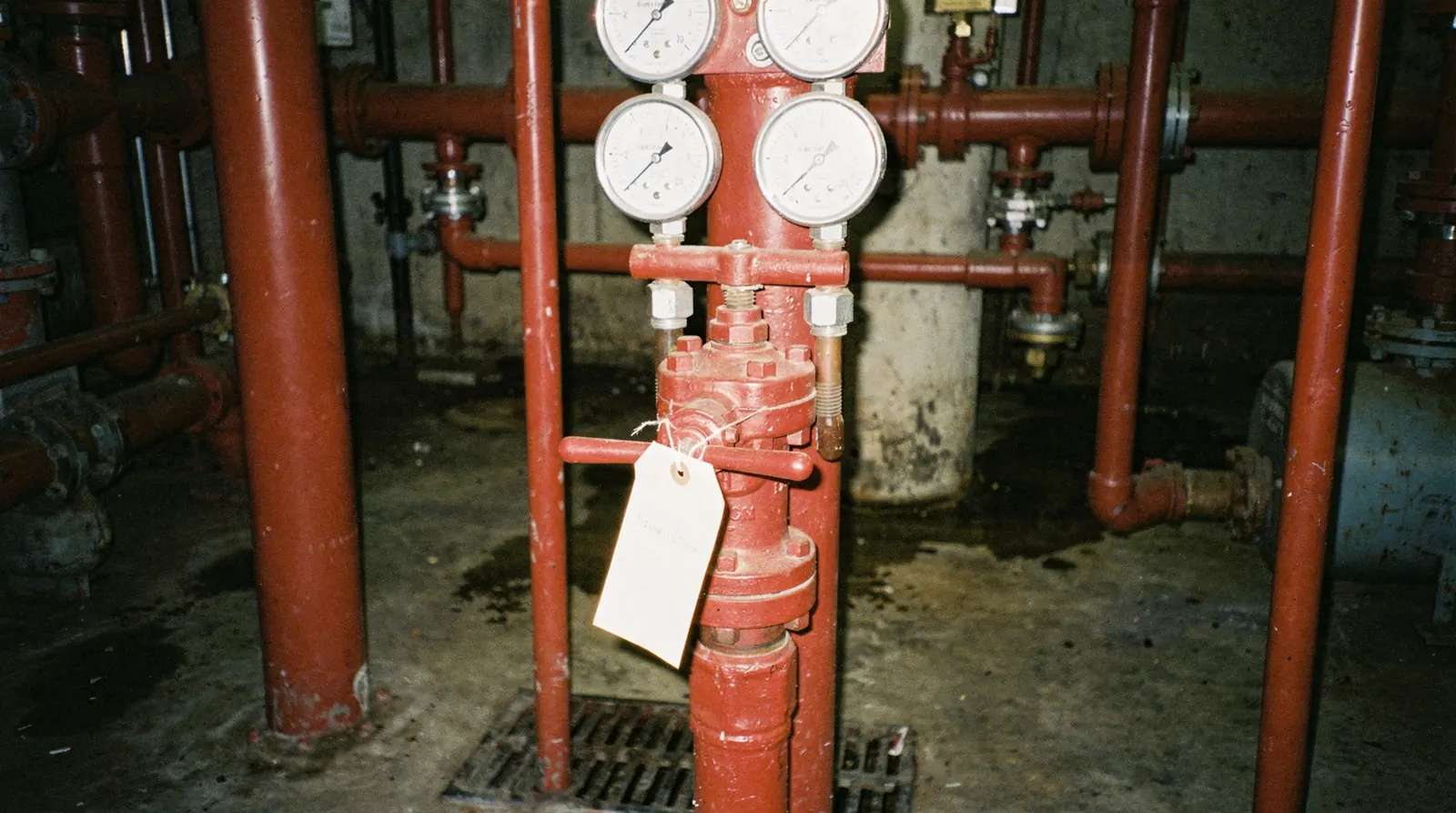
- Tag the system. Impairment tags go at each fire department connection and each system control valve, plus any other location the authority having jurisdiction requires. A practical tag says what's impaired, who authorized it, and the date and time.
The 10-hour threshold and what it means
If a system is out of service more than 10 hours in a 24-hour period, NFPA 25, Chapter 15 asks for one or more of these, as NFPA staff describe it:
- Evacuation of the affected area
- An approved fire watch
- A temporary water supply
- An approved program to eliminate ignition sources and limit fuel in the area
Ten hours is not a free window. It's the point where the standard says do something specific. The Alberta code applies from the first minute: 6.1.1.4 says alternative measures whenever any part is shut down, and Division C, 2.2.7.2 puts notification ahead of the work. In practice, treat the shorter jobs as a reason to think, not to skip.
A fire watch is one measure among several. If you go that route, know that the fire code names it in only a few situations and that we found no published Edmonton patrol interval. Confirm what's acceptable with the fire department.
During the work
The list below is short because a shutdown is mostly waiting, and you're trying to stay disciplined about the waiting.
- Keep the tags on. No tag comes off until the system is back and tested.
- Keep the coordinator reachable and a working log at the tagged valve or in the mechanical room.
- Limit hot work and other ignition sources near the affected area unless a permit and a fire watch are in place.
- Watch the clock against the 10-hour mark, and against any shorter limit the fire department gave you.
- If the job runs long, tell the people you notified. An extension is a new decision, not a continuation of the old one.
- Keep temporary hose lines and extinguishers unobstructed and known to whoever is on site.
In an Edmonton winter, the exposure is worse. The National Building Code 2023 Alberta Edition, Appendix C, lists Edmonton's January design temperatures as -30°C (2.5 percent) and -33°C (1 percent), and 3.2.5.17 requires fire protection equipment in unheated areas to be protected from freezing. A drained-down wet system in a building with an open dock door isn't just impaired. It's a trap: put the heat back before the water goes back, and check dead legs and low points. Our article on wet versus dry sprinklers in Alberta winters covers the freeze side of it.
Emergency impairments, when nobody planned this
Some impairments are found, not scheduled. A closed valve, a burst pipe, a frozen branch line, a failed pump, an accidental discharge.
The first fifteen minutes look like a planned impairment run at high speed:
- Make the area safe and stop the water if there's a discharge, with a plan for the valve. Don't close a main without knowing what it isolates.
- Call your sprinkler contractor and the fire department, and tell them which system and how big the impaired area is.
- Assign the coordinator role on the spot. It doesn't matter who, as long as it's one person.
- Tag the valve. Do the inspection of the affected area, pick alternative measures, notify the insurer and the monitoring company.
- Decide what to do with the people and the stock: sometimes the answer is to evacuate the area.
Emergency repair is exactly where a sprinkler contractor earns their keep, and our emergency service covers freeze-ups, accidental discharges and impairments. 780.760.0806, any hour. We won't promise a response time in an article. Ask when you call.
Restoring service
The system isn't back when the last fitting is tight. The restoration steps in NFPA's summary are: do the necessary inspections and tests, notify the same people you told about the shutdown, and remove the tags. What are the "necessary tests"? That depends on the work, and your contractor decides with reference to NFPA 25, Chapter 15 and the manufacturer.
As general practice, and not a code quote:
- Confirm every control valve you touched is fully open, then sealed, locked or supervised as it was before.
- Check the gauges against what they read before the shutdown.
- Where the water supply came through a valve you operated, an open main drain test with a note of static and residual pressure is a fast way to spot a valve that isn't fully open. Compare it with last time.
- If the work touched alarm devices, test that the waterflow signal reaches the panel and the monitoring company.
- Tell the fire department, the insurer, the monitoring company and the owner that protection is restored, with the time.
- Remove the tags and file the form.
Then keep the paperwork. Alberta's fire code requires that inspection, testing and maintenance records be kept at the premises for the authority having jurisdiction, and that no record is destroyed within five years of being prepared (Division C, 2.2.1.2). Put the impairment form with them. Our fire system inspections page covers the rest of the routine record set, and the inspection frequencies article lists what NFPA 25-2017 asks for and when. In Edmonton, deficient reports must also go to the fire department through the City's LIV portal, and EFRS recommends uploading all reports, per its July 2026 bulletin (the portal took effect September 8, 2026). That could change, so ask your contractor what applies to the work.
Frequently asked questions
What is a fire sprinkler impairment?
Any time a sprinkler system or part of it is out of service. NFC(AE) 2023's explanatory note to 6.1.1.4 says any interruption, including routine testing, counts as a temporary shutdown. Planned work such as moving heads for a tenant fit-out and unplanned events such as freeze-ups, closed valves and equipment failure are both impairments, and both call for alternative measures and notification.
Who should be the impairment coordinator?
Someone the owner assigns, who's usually on site and has the authority to stop a contractor. NFPA 25, Chapter 15 has the owner assign the coordinator and requires preplanned impairments to be authorized by that person before the system goes out of service. Name a backup. In a small building it may be the property manager; in a larger one, the facility manager.
How long can a sprinkler system be out of service in Alberta?
The fire code doesn't set a fixed number. It requires alternative measures for any shutdown (NFC(AE) 2023, 6.1.1.4). NFPA 25, Chapter 15 asks for specific measures, such as an approved fire watch or temporary water, when a system is out more than 10 hours in a 24-hour period. Your fire department or insurer may want less time, so confirm.
Who do I notify when I shut off my sprinklers?
The fire department, your insurer, your alarm monitoring company, the owner, other authorities having jurisdiction and area supervisors, per NFPA's description of the Chapter 15 program. The Alberta fire code also expects notification, preferably in advance, and wants the procedure acceptable to the fire department before repairs or alterations (Division C, 2.2.7.2(1)).
What does an impairment tag have to say?
Chapter 15 requires a tag impairment system, with tags at each fire department connection and system control valve, and elsewhere as the authority having jurisdiction requires. The wording of the tag isn't specified in the sources we used. A practical tag names the system or zone impaired, the date and time, who authorized it and how to reach the coordinator.
Sources
- National Fire Code 2023 Alberta Edition, National Research Council Canada
- Fire codes and standards, Government of Alberta
- Impairment Procedures for Sprinkler Systems That Are Out of Order, NFPA
- Fire Marshal Bulletin, Fire Alarm Reporting and Inspection Form Requirements (July 2026), City of Edmonton
- Fire Inspection Report Submission, City of Edmonton