Schools run on a drill calendar
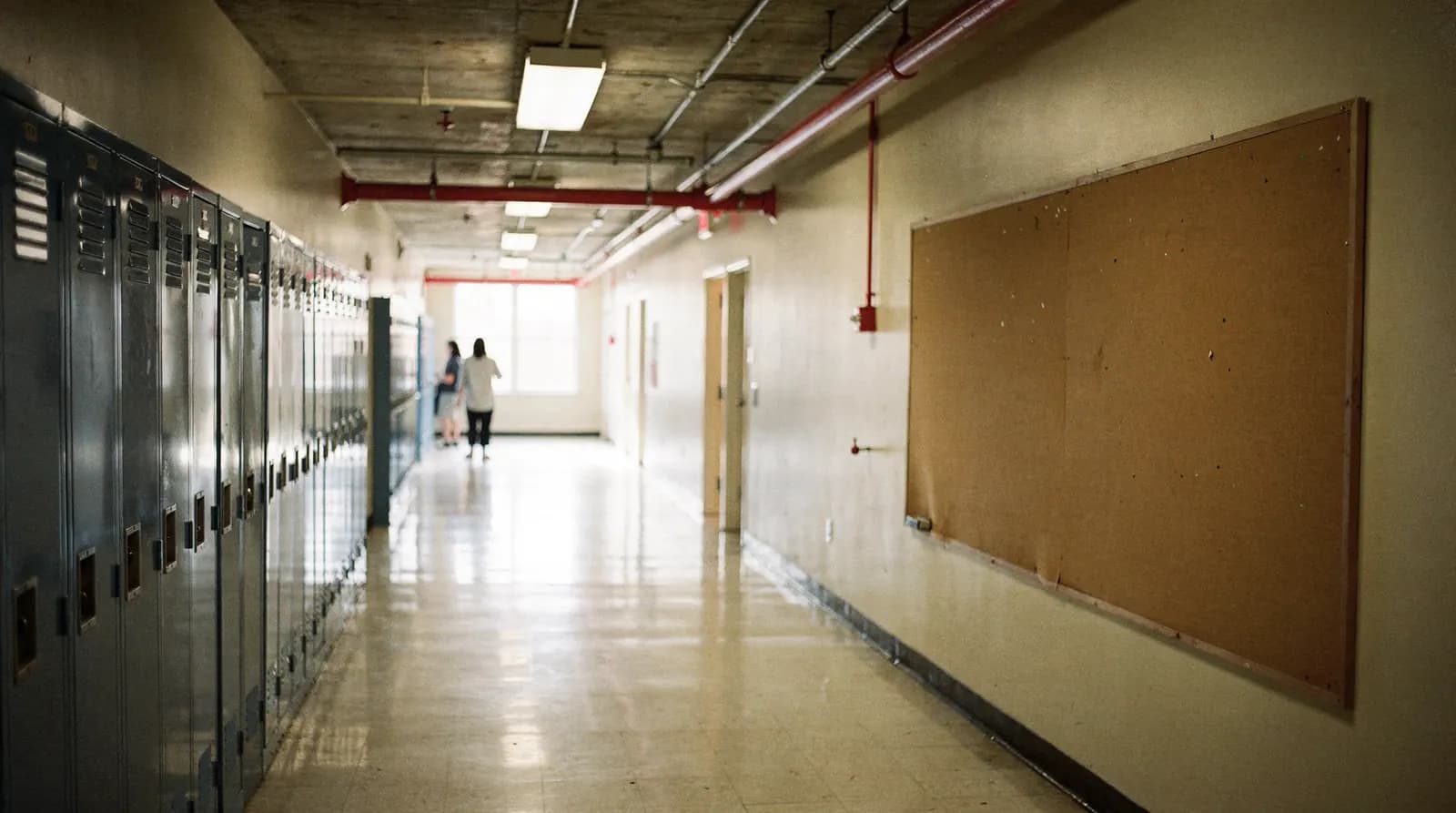
A school's fire protection gets judged as much on its drills as on its hardware. In schools attended by children, the National Fire Code 2023 Alberta Edition (NFC(AE) 2023) asks for at least three total evacuation drills in each of the fall and spring terms, and drill records stay in the building (Division B, 2.8.3.2; Division C, 2.2.1.2). Schools, colleges, universities and daycares also all need a written fire safety plan (Division B, 2.8.1.1). Our guide to fire safety plans in Edmonton covers what the plan contains.
The plan is reviewed at least every 12 months and posted, so a substitute teacher can find the route. In Edmonton the fire department asks to hear about a drill beforehand, so the alarm doesn't turn into a dispatch. Check the current contact on the City's Fire Rescue Services page rather than trusting a number in someone's binder.
The building code files schools and colleges under Group A-2. Corridors serving classrooms need emergency lighting at an average of 10 lx with a 1 lx minimum, and daycare areas get the same (NBC 2020, 3.2.7.3). Our emergency lighting and exit signs page covers the monthly and yearly tests. Emergency lighting testing in Alberta explains how to keep the test records.
A campus is several occupancies stacked together
One university building can be a lecture hall, a chemistry lab and a residence, and each part brings its own rules.
| Space | NBC group | A rule that catches people |
|---|---|---|
| Classrooms, libraries, museums | A-2 | Emergency lighting at 10 lx average in corridors serving classrooms |
| Theatres | A-1 | Fire safety plan for any assembly area over 30 occupants |
| Arenas, pools, rinks | A-3 | Same assembly rules; emergency lighting where 60 or more people gather |
| Residence buildings and dormitories | C | Smoke alarms in every sleeping room that isn't part of a dwelling unit |
| Laboratories | F-2 in the NBC's examples | Fire drills at least every 3 months |
| Towers over 36 m (18 m in some cases) | A, D, E or F | High-building rules, including drills every 2 months and voice communication |
Sources for the rows are NBC 2020's occupancy notes and NFC(AE) 2023, and Alberta's edition of the building code can vary from the national text. Confirm with your consultant.
Two consequences follow. Inspection can't be one visit per campus. A residence tower and a lab wing have different frequencies, different records and often different building managers, so the schedule needs to be built by building. And every renovation deserves a quick occupancy check first. Converting a classroom to a lab, or a lecture hall to a public event space, changes the group, and that can pull the fire alarm and sprinkler design along with it (NFC(AE) 2023, 2.1.3.1(2), requires an upgrade where a change of use raises the hazard past the design basis). The inspection page lists the frequencies.
Libraries, museums and archives worry about water as much as fire
Sprinklers put out (or hold down) the fire, and the water then does its own damage to books, paper and artwork. That tension shapes the design.
Preaction systems are the usual compromise in museums and historic buildings. The pipe stays dry until a detector confirms a fire, and only then does water move to the heads, so a nicked pipe or a knocked head doesn't flood a gallery. The catch is more parts to maintain and a delay between detection and water. Details on the wet, dry and preaction options are on the fire sprinkler systems page.
For a vault or rare-book room, a clean agent system is the other route. The fire code's edition list names NFPA 2001-2018 for clean agent systems. Agent works only in a sealed enclosure, which means a room-integrity test and a plan for the doors and dampers. Special hazard suppression covers the design and the discharge safety.
NFPA 909 (cultural resource properties: museums, libraries and places of worship) and NFPA 232 (protection of records) are the standards collections managers and insurers tend to raise. We couldn't find either in the NFC(AE) 2023 referenced-standards table, so treat them as guidance unless the AHJ, your insurer or a heritage consultant makes them a requirement. Retrofits in older buildings often need an alternative solution, which is fire code consulting work.
Assembly halls and arenas
An assembly room's limit is its occupant load, and it applies to the room, not the booking. Picture a community hall that hosts a 40-person meeting on Tuesday and 400 guests at a wedding on Saturday. Same room, same alarm. The fire safety plan and the crowd have to be sized for Saturday.
Alberta has published STANDATA interpretations on how to calculate assembly occupant loads (a joint building and fire interpretation appeared in 2024, and at least one version is marked superseded), so ask the AHJ which one applies to your project. The STANDATA itself points out that occupant load feeds into fire alarm requirements, exit capacity and washroom counts, so an event space is worth a look at the fire alarm systems page before the room gets booked.
Working in a building that stays open
Most public-sector jobs happen around occupants. Three items decide whether that goes smoothly.
The first is the construction fire safety plan. Alberta requires one before construction, alteration or demolition starts, and the fire department and the AHJ must accept it in writing (Division C, 2.2.1.2(14)). NFC(AE) 2023 references NFPA 241-2019 for construction safeguarding, and Edmonton's fire department publishes guidelines for these plans.
The second is impairments. Any interruption to a system is a shutdown that needs alternative measures (Division B, 6.1.1.4). A fire alarm out for more than 2 hours means notifying the fire department (Division C, 2.2.7.2). For sprinklers, NFPA 25 Chapter 15 sets the procedure, and NFPA's guidance on impairments says a system out more than 10 hours in a 24-hour period needs a fire watch, temporary water, evacuation of the area or an approved program to cut ignition sources and fuel. Sequence the work by wing and by summer break, so no riser stays shut longer than it must. Our impairment checklist and fire watch requirements in Alberta cover the planning side.
The third is the schedule itself. Tie-ins, alarm cutovers and testing all want a quiet building. Public owners should book them early in the design phase, not after the ceiling tiles are back.
What Sterling can do for public owners and their contractors
Sterling can design and draw fire protection systems for permit (hydraulic calculations, AutoCAD, HydraCAD, BIM coordination), install them in new and existing buildings, and take on the inspection and maintenance program afterwards with digital records. See fire protection design and fire system installation. Code consulting covers occupancy classification and orders, and 24/7 emergency repair answers at 780.760.0806.
Registered-professional sign-off, alternative solutions and heritage approvals sit with your consultants and the AHJ. Tell us early who they are.
Sources
- National Fire Code 2023 Alberta Edition, National Research Council Canada
- National Building Code 2020 Part 3 extracts, reproduced with NRC permission by Aimlite
- Fire Safety Plan for Construction Sites, City of Edmonton
- Impairment Procedures for Sprinkler Systems That Are Out of Order, NFPA
- STANDATA interpretation: building, occupant loads, Government of Alberta
- NFPA 909 Code Development, NFPA
- NFPA 232 Standard Development, NFPA