
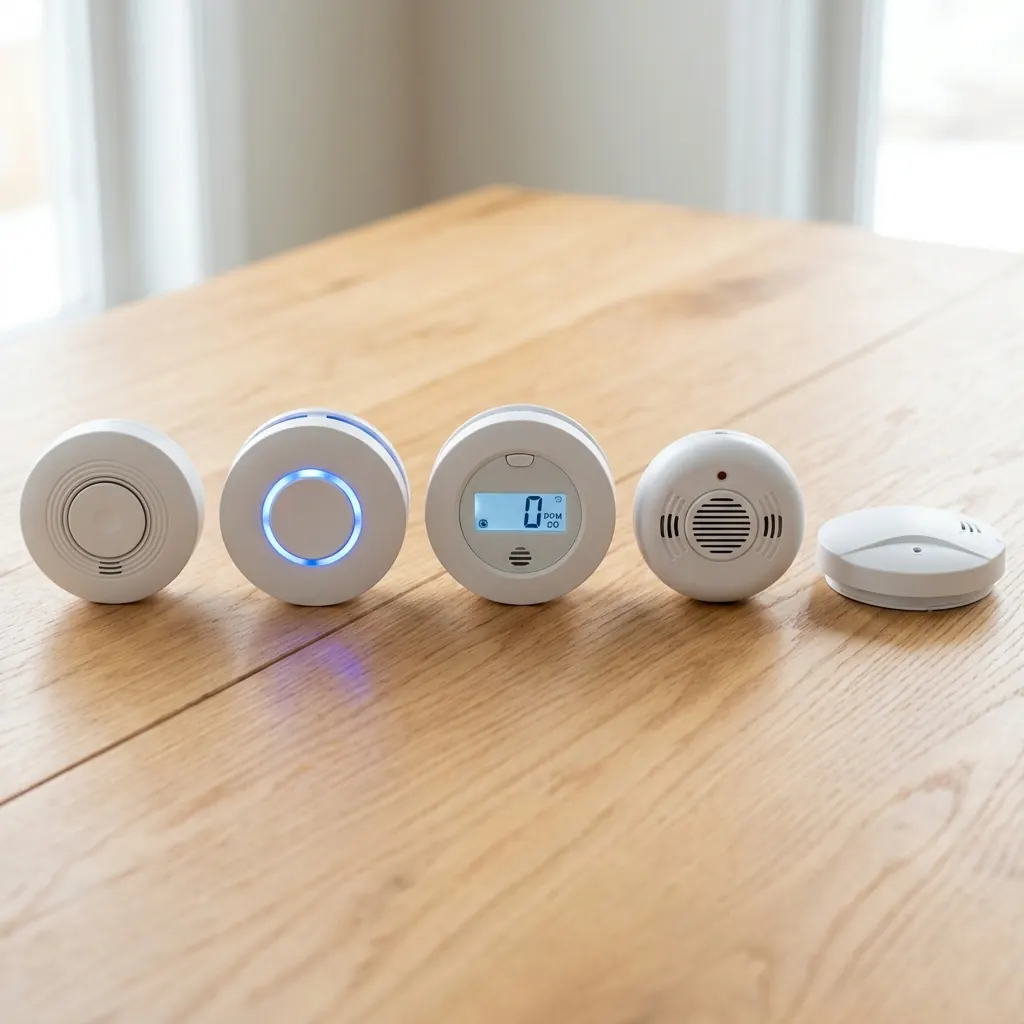
Two Hazards, One Device
Combination smoke and carbon monoxide alarms solve a practical problem. Instead of mounting two separate devices on every ceiling, you install one unit that handles both. The technology to do this reliably has existed for over a decade. The question is not whether combo units work. It is which ones work well enough to justify the price difference, and which features are genuinely useful versus marketing noise.
This guide covers the current residential options in Canada as of 2025. The market shifted when Google discontinued the Nest Protect. First Alert and Kidde now dominate the smart segment. The traditional (non-smart) segment remains the practical choice for most homes.
What Actually Matters in a Combination Alarm
Before comparing models, understand the features that affect performance versus the ones that affect convenience. They are different categories and should be weighted differently.
- Sensor type: Photoelectric smoke sensors are better at detecting slow, smoldering fires. Ionization sensors respond faster to fast-flaming fires. Dual-sensor units cover both. For a combination smoke/CO alarm in a home, photoelectric is the safer default because smoldering fires are far more common in residential settings and produce more CO.
- CO sensor: All legitimate combination units use electrochemical CO sensors. There is no meaningful variation in sensor quality among certified products. The certification testing (UL 2034 in the U.S., CAN/CSA 6.19 in Canada) enforces response thresholds that all listed products must meet.
- Interconnection: The ability for all alarms in the home to sound simultaneously when one detects a hazard. Hard-wired interconnection uses a shared signal wire. Wireless interconnection uses RF. Both work. What matters is that every unit in your system is compatible.
- Sealed battery life: 10-year sealed lithium batteries eliminate the need for annual battery changes. This is now a code requirement in many jurisdictions and should be considered mandatory for any battery-powered installation.
- Canadian certification: CAN/ULC-S531 for smoke, CAN/CSA 6.19 for CO. Both marks must appear on a combination unit sold in Canada. No exceptions.
Smart Alarms vs. Traditional Alarms
Smart combination alarms connect to your home Wi-Fi network and send alerts to your phone. They can tell you which room triggered, what type of hazard was detected, and let you silence false alarms remotely. Some integrate with broader smart home ecosystems like Google Home or Amazon Alexa.
Traditional alarms sound a horn when they detect a hazard. That is it. They cost less, require no Wi-Fi, no app, no account setup, and no firmware updates. They also do not stop working when your internet goes down or when the manufacturer discontinues the product line.
The safety performance of both categories is equivalent. A $35 traditional combo unit certified to the same standards as a $130 smart unit will detect smoke and CO within the same response windows. The difference is in notification delivery, not detection capability. For homes where occupants are always present, traditional alarms are perfectly adequate. For rental properties, vacation homes, or households where you want remote monitoring, smart alarms add genuine value.
The Nest Protect Is Dead. What Now?
Google officially discontinued the Nest Protect. Existing units will continue to function and receive security updates until they reach their 10-year expiration. After that, they are electronic waste. Google is not making a replacement.
If you built your system around Nest Protects, the transition path is First Alert. Google partnered with First Alert to provide a compatible replacement that integrates with the Google Home app. Existing Nest Protects and new First Alert smart units can coexist in the same system and communicate with each other. That interoperability is the primary reason First Alert is the recommended replacement, not because the hardware is necessarily superior to alternatives.
Current Options Worth Considering
First Alert Smart Smoke and CO Alarm. This is the direct Nest Protect successor for the Google Home ecosystem. Voice alerts identify the hazard type and room location. Mobile notifications through the Google Home app. Remote silencing for false alarms. Hardwired with battery backup, or battery-only models available. Canadian-certified (ULC/CSA). If you are already in the Google ecosystem, this is the default choice.
Kidde Smart Smoke and CO Alarm (Ring-compatible). Built for Amazon and Ring households. Integrates with the Ring app for mobile alerts, remote testing, and remote silencing. Professional monitoring available through a Ring Protect subscription. Features advanced sensing technology designed to reduce cooking-related false alarms. Hardwired and battery models available. If your home security is Ring-based, this is the natural fit.
Kidde Hardwired Combination Alarm (non-smart). The workhorse option. No Wi-Fi, no app, no smart features. Hardwired with battery backup. Interconnects with other Kidde hardwired units via signal wire. Photoelectric smoke sensor and electrochemical CO sensor. 10-year lifespan. This is what goes into most new construction in Canada because it meets every code requirement at a fraction of the smart unit price.
First Alert 10-Year Sealed Battery Combination Alarm. Battery-only, no wiring required. 10-year sealed lithium battery eliminates maintenance. Wireless interconnection with compatible First Alert units. Ideal for retrofitting older homes that lack hardwired alarm circuits. Meets CAN/ULC-S531 and CAN/CSA 6.19.
Side-by-Side Comparison
| Feature | First Alert Smart | Kidde Smart (Ring) | Kidde Hardwired | First Alert 10-Year Battery |
|---|---|---|---|---|
| Ecosystem | Google Home | Amazon / Ring | None (standalone) | None (standalone) |
| Power | Hardwired + backup or battery | Hardwired + backup or battery | Hardwired + backup | Sealed 10-year lithium |
| Interconnection | Wireless (Wi-Fi) | Wireless (Ring) | Wired (signal wire) | Wireless (RF) |
| Voice Alerts | Yes (hazard + location) | Yes | No (horn only) | No (horn only) |
| Mobile Alerts | Yes (Google Home app) | Yes (Ring app) | No | No |
| Remote Silence | Yes | Yes | No | No |
| Smoke Sensor | Photoelectric | Photoelectric | Photoelectric | Photoelectric |
| CO Sensor | Electrochemical | Electrochemical | Electrochemical | Electrochemical |
| Canadian Certified | Yes | Yes | Yes | Yes |
| Best For | Google/Nest households | Ring/Alexa households | New construction, budget | Retrofits, older homes |
Photoelectric vs. Ionization, the debate is settled
Ionization sensors respond faster to fast-flaming fires. Photoelectric sensors respond faster to slow, smoldering fires. In residential settings, smoldering fires are more common and more dangerous because they produce large amounts of CO before visible flames appear. A smoldering fire in a couch or mattress can fill a room with lethal CO concentrations while the occupants sleep.
Every combination smoke/CO alarm currently on the market from a major manufacturer uses a photoelectric smoke sensor. Ionization-only units have been phased out of the residential market in most jurisdictions because of their high nuisance alarm rate (they are extremely sensitive to cooking smoke) and their slower response to the fire type that kills the most people.
If you have older ionization-only smoke alarms in your home, replacing them with photoelectric combination units is a meaningful safety upgrade, not just a technology refresh.
Installation Realities
Battery-powered units are a genuine DIY project. The mounting bracket attaches to the ceiling with two screws. The alarm twists onto the bracket. Total time per unit: five minutes. No electrician needed.
Hardwired units require an existing alarm circuit or new wiring run by a licensed electrician. If your home was built with hardwired smoke alarms, the circuit is already there and replacement is straightforward. If you are adding new hardwired units to an older home, expect to pay for electrical work. In Alberta, the work must comply with the Canadian Electrical Code and be inspected.
How Many Units Does a Typical Home Need?
A standard two-story home with a basement, three bedrooms, a gas furnace, and an attached garage needs a minimum of six combination alarms to meet code: one inside or within 5 meters of each bedroom (three), one on each level (three levels = three, but the bedroom units overlap), and one near the furnace service room. The exact count depends on your floor plan and where the fuel-burning appliances sit relative to sleeping areas.
More units is not a problem. Fewer is a code violation. When in doubt, add one. The cost of a $35 alarm is trivial compared to the liability of a coverage gap.
Keeping Them Functional After Installation
Test every unit monthly by pressing the test button. The horn should sound within a few seconds. If it does not, replace the unit or its batteries immediately.
Vacuum the sensor openings every six months to remove dust accumulation. Dust reduces sensor sensitivity over time and is a leading cause of both delayed detection and nuisance alarms.
Replace the entire unit at or before its 10-year expiration date. Write the installation date on the back of the unit in permanent marker when you install it. The manufacture date is printed on the label, but the installation date is what matters for your replacement schedule.
Professional Installation and System Design
For single-family homes with straightforward layouts, selecting and installing combination alarms is manageable without professional help. For multi-unit residential buildings, secondary suites, or any situation involving fire alarm system integration with a central panel, the design, installation, and commissioning should be handled by a licensed fire alarm contractor.
Sterling designs and installs fire alarm systems for residential and commercial properties across Edmonton and Alberta. If your project involves more than a few standalone alarms, we can help with system design, code compliance, and inspection coordination. Call 780-760-0806 or visit rssterling.ca/contact.