
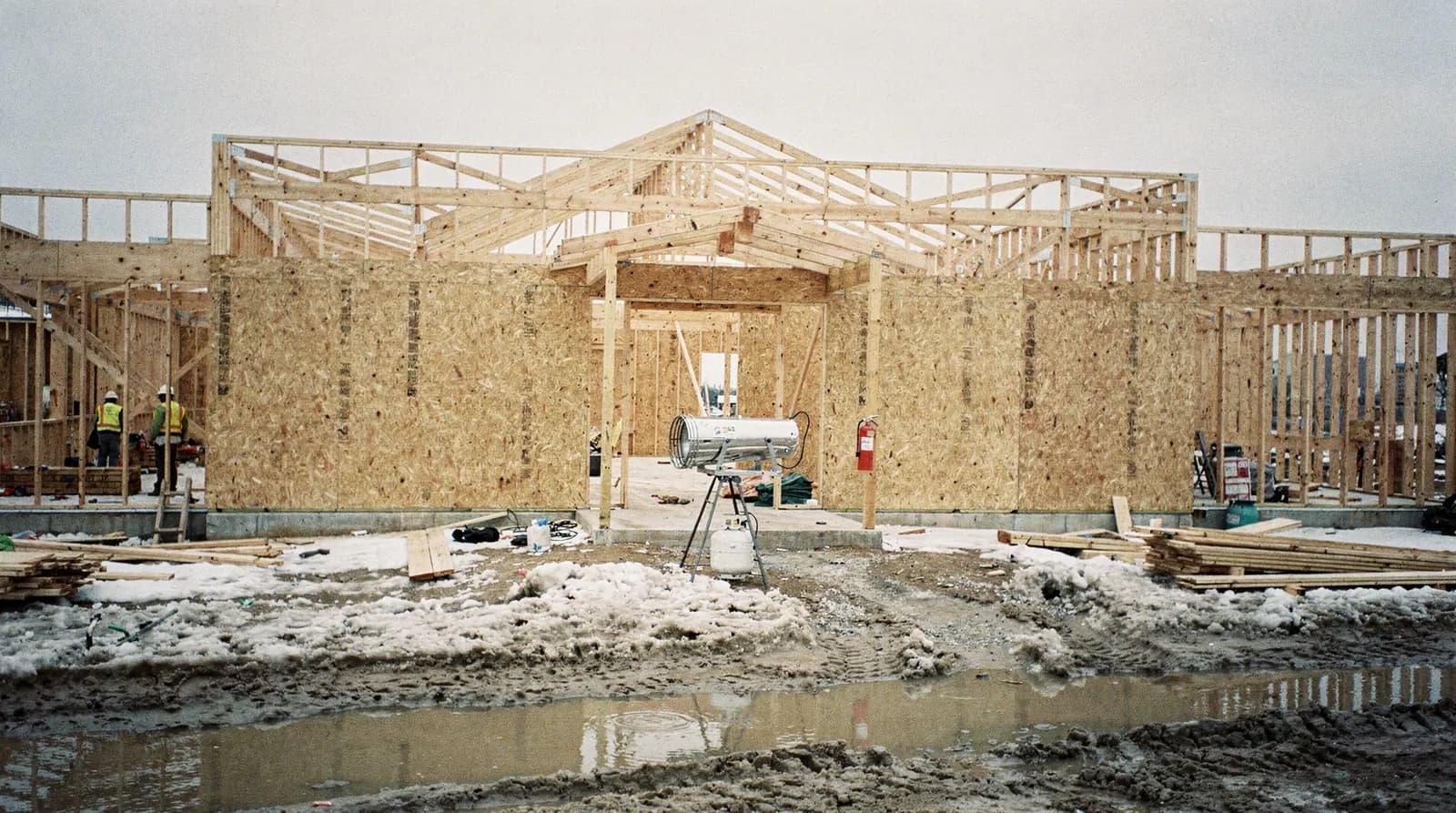
Who needs a construction site fire safety plan in Alberta
Every construction, alteration or demolition site in Alberta needs a written fire safety plan before the work starts. The National Fire Code 2023 Alberta Edition (NFC(AE) 2023) lists construction and demolition sites under Section 5.6 among the places that need one (Division B, 2.8.1.1), says the plan is prepared before work begins (2.8.2.11 and 5.6.1.3), and Alberta adds a local step in Division C, 2.2.1.2(14): the plan has to be accepted in writing by the fire department and the authority having jurisdiction (AHJ).
That last part catches people. Writing the plan isn't the finish line. Somebody with authority has to say yes, on paper, and you want that paper in the site trailer before the first crane pick.
The plan isn't tied to project size in the way a building permit is. A tenant fit-out in an occupied mall is an alteration, and so is a gut job on a warehouse. If work is going on inside or around a building, assume the section applies and ask the AHJ how much paper it wants for a small job.
What goes into the plan
The code gives a short list. A construction site plan covers the fire safety roles on site (including a fire watch where one applies), emergency procedures, the control of fire hazards, and the maintenance of firefighting measures (Division B, 2.8.2.11 and 5.6.1.3). The general fire safety plan rules add that plans are prepared in cooperation with the fire department and reviewed at intervals not over 12 months (2.8.2.1). On a two-year build, put the review date in the schedule so nobody rediscovers it at the 13th month.
Here is how we'd turn that list into something a superintendent can use. Everything in the right-hand column beyond the code's four headings is practice, not code text.
| The code asks for | In practice, write down |
|---|---|
| Site fire safety roles | Who is the site fire safety lead on each shift, who backs them up, who holds the hot work permits, who is the fire watch |
| Emergency procedures | How to raise the alarm on a site with no working building alarm, who calls 911, where crews muster, who meets the fire department at the gate and how they reach the site |
| Control of fire hazards | Hot work, temporary heat, fuel and cylinder storage, waste and packaging removal, smoking areas |
| Maintenance of firefighting measures | Where extinguishers are, who checks them, which permanent systems are live and which are impaired |
Keep it short enough to read. A 60-page plan that nobody has opened does less than a four-page plan taped inside the gate box and briefed at orientation.
Getting the plan accepted in Edmonton
In Edmonton, the owner, developer or contractor is responsible for the construction fire safety plan. Edmonton Fire Rescue Services (EFRS) publishes guidelines for what a plan should contain, rather than requiring its old fillable template, and Fire Safety Codes Officers may visit the site to check the plan and the protection of adjacent properties (NFC(AE) 5.6.1.2). The City's page on fire safety plans for construction sites lists a review fee. Fees change, so read the current EFRS fee schedule instead of trusting anyone's blog post, this one included. We don't state a review time either, because none is published in what we found.
Two separate City groups touch your project, and mixing them up costs days. Fire Prevention inside EFRS handles fire code enforcement and the construction fire safety plan. The building permit and trade permit inspections belong to the City's Safety Codes, Permits and Inspections group. Acceptance of the fire safety plan doesn't replace a permit, and a permit doesn't substitute for the plan.
Outside Edmonton, the AHJ is your municipality's fire department or its accredited safety codes agency. We haven't verified how each surrounding municipality handles construction plans, so call the fire prevention office before you assume Edmonton's process carries over. The Alberta fire code compliance guide explains who the AHJ is and how orders work.
Hot work is where site fires start
Torches, grinders and welders start fires in buildings that have no working sprinklers yet, and the fire code is specific about hot work. Under NFC(AE) 2023 Division B, 5.2.3.1 to 5.2.3.3, where hot work can't be done in a noncombustible area:
- a continuous fire watch stays through the work and for at least 60 minutes after it stops;
- a final inspection follows 4 hours after completion, or a more thorough inspection straight after the fire watch;
- combustibles within 15 m are protected;
- the fire watch is trained and has extinguishing equipment on hand;
- and if exposed combustibles can't all be seen from one spot, more than one person is needed.
Read that list against a real job. A plumber sweating copper above a ceiling that's already framed with wood blocking isn't in a noncombustible area. Nor is a welder on a mezzanine over stacked foam insulation. The 15 m radius is generous, and it's meant to be.
Put hot work under a permit system inside the plan, with a named person who can say no. And be aware that your sprinkler and plumbing subs bring their own torches and cutting tools. Ask each one on the pre-job call what hot work they expect to do, so the permit and the fire watch don't get invented on the day.
Existing fire protection during construction
Where a building already has sprinklers or an alarm, the code wants them kept working while you build. Existing fire protection systems must stay operational where reasonably practical, and any shutdown follows the alternative measures rule in 6.1.1.4 (Division B, 5.6.1.13). That rule says that when part of a system is temporarily shut down, alternative measures are taken to maintain protection, and the explanatory note is clear that even routine testing counts as a shutdown.
Some site situations trigger a watch outright. A watch with tours at intervals not over one hour is required at demolition sites while part of the building is still occupied, and during construction in an occupied building that has no fire alarm system. The watcher must be able to sound a warning and call the fire department (5.6.1.14).
An impairment plan belongs in the site plan. The pieces the code and NFPA 25 give you:
- A notification procedure for tests, repairs and alterations to fire protection installations (Division B, 6.1.1.3), acceptable to the fire department before repairs or alterations start (Division C, 2.2.7.2(1)).
- If a fire alarm system or part of it is out of service for more than 2 hours, the owner notifies the fire department and, when directed, provides continuous surveillance until it's restored (Division C, 2.2.7.2(2) and (3)).
- NFPA 25, Chapter 15 (the impairments chapter, part of the 2017 edition Alberta references): an impairment coordinator authorizes planned shutdowns, tags go on the fire department connection and the system control valve, and the affected area is inspected first. As NFPA's own staff describe it, a system out for more than 10 hours in a 24-hour period calls for one or more of evacuating the area, an approved fire watch, a temporary water supply, or an approved program to eliminate ignition sources and limit fuel.
- On restoration, the needed inspections and tests, notice to the same parties, and tag removal.
Those pieces come from NFPA's description of Chapter 15, and the exact numbering in the 2017 edition wasn't confirmed, so cite the chapter and not a sub-clause. For Edmonton, EFRS says deficiencies that affect a system's operation or coverage are reported within 24 hours and may require emergency repairs or fire watch. No Edmonton patrol interval was found, so don't quote one. If a sprinkler main fails on your site after hours, the 24/7 emergency repair line is 780.760.0806.
What the code doesn't tell you about temporary protection
Two questions come up on every multi-storey job. Do standpipes have to be usable as the floors go up? And how far behind the structure may the permanent sprinklers trail? We haven't verified a clause that answers either, and we won't guess. An explanatory note in the NFC(AE) points to NFPA 241 (the 2019 edition is the one the code lists) as a source of guidance for fire protection during construction, alteration and demolition, and the design team's code analysis, the plan reviewer and the AHJ are who settle both questions for your building.
Ask them in writing, early, and put the answers in the plan. It's a lot cheaper to move a standpipe schedule in March than in the week the crane leaves.
A working order of operations
- Confirm who the AHJ is for the site, and what the fire department wants to see.
- Draft the plan with the general contractor's site safety lead, and bring in the mechanical and electrical subs before it's final.
- Submit it, and get the written acceptance (Division C, 2.2.1.2(14)) before work starts.
- Brief every crew at orientation and post the emergency procedure at the gate.
- Set up the hot work permit and fire watch routine, and log them.
- Set up the impairment routine, so a shutdown request goes through one person.
- Review the plan at least every 12 months, and whenever the site changes shape (a new phase, a new access road, a heated enclosure).
Once the building's own systems go live, the fire sprinkler systems and the owner's inspection duties take over, and our note on Alberta Fire Code annual inspections covers what comes next. Fire protection design and installation on these projects follows the same rhythm, and the fire system installation page walks through the phases from underground to occupancy. If you need help lining the plan up with a sprinkler schedule, send us the details through the contact page.
Frequently asked questions
Do I need a fire safety plan for a small renovation in Alberta?
The NFC(AE) 2023 requires a plan for construction, alteration and demolition sites under Section 5.6, and it doesn't carve out a small-job exemption in what we read. The code's explanatory note says the degree of application of Section 5.6 may be minimal for work that doesn't expose other buildings or occupants, and should be settled in advance as part of the plan. In practice, small jobs get short plans. Ask the AHJ what it expects for your scope before you submit anything, because the answer for a two-week tenant fit-out isn't the same as for a new build.
Who accepts a construction site fire safety plan in Alberta?
Alberta's Division C, 2.2.1.2(14) says the fire department and the AHJ accept it in writing. In Edmonton, EFRS publishes guidelines and its officers may visit the site to check the plan and the protection of adjacent properties. Outside Edmonton, call the local fire department or its accredited agency.
How long does hot work fire watch last after the work stops?
Under NFC(AE) 2023 Division B, 5.2.3.1 to 5.2.3.3, where hot work can't be done in a noncombustible area the fire watch continues for at least 60 minutes after the work. A final inspection follows 4 hours after completion, or a more thorough inspection right after the fire watch. Combustibles within 15 m need protection.
Can we shut off the sprinklers in an occupied building during construction?
Only with alternative measures in place and with the notification procedure acceptable to the fire department. Existing systems must stay operational where reasonably practical (5.6.1.13), and NFPA 25 Chapter 15 describes an impairment program with tagging and a coordinator. Longer outages call for evacuation, a fire watch or other measures.
Does the City of Edmonton charge for a construction fire safety plan review?
The EFRS fee list has shown a review fee, but fees change every year. Check the current fee schedule on the City's site or ask Fire Prevention before you budget. We don't quote it here.
Sources
- National Fire Code 2023 Alberta Edition, National Research Council Canada
- Fire codes and standards, Government of Alberta
- Fire Safety Plan for Construction Sites, City of Edmonton
- Fire Marshal Bulletin on fire alarm reporting and inspection form requirements, Edmonton Fire Rescue Services
- Impairment Procedures for Sprinkler Systems That Are Out of Order, NFPA
- Safety Codes Act, Alberta King's Printer